
Hardscape Construction FAQs For Homeowners
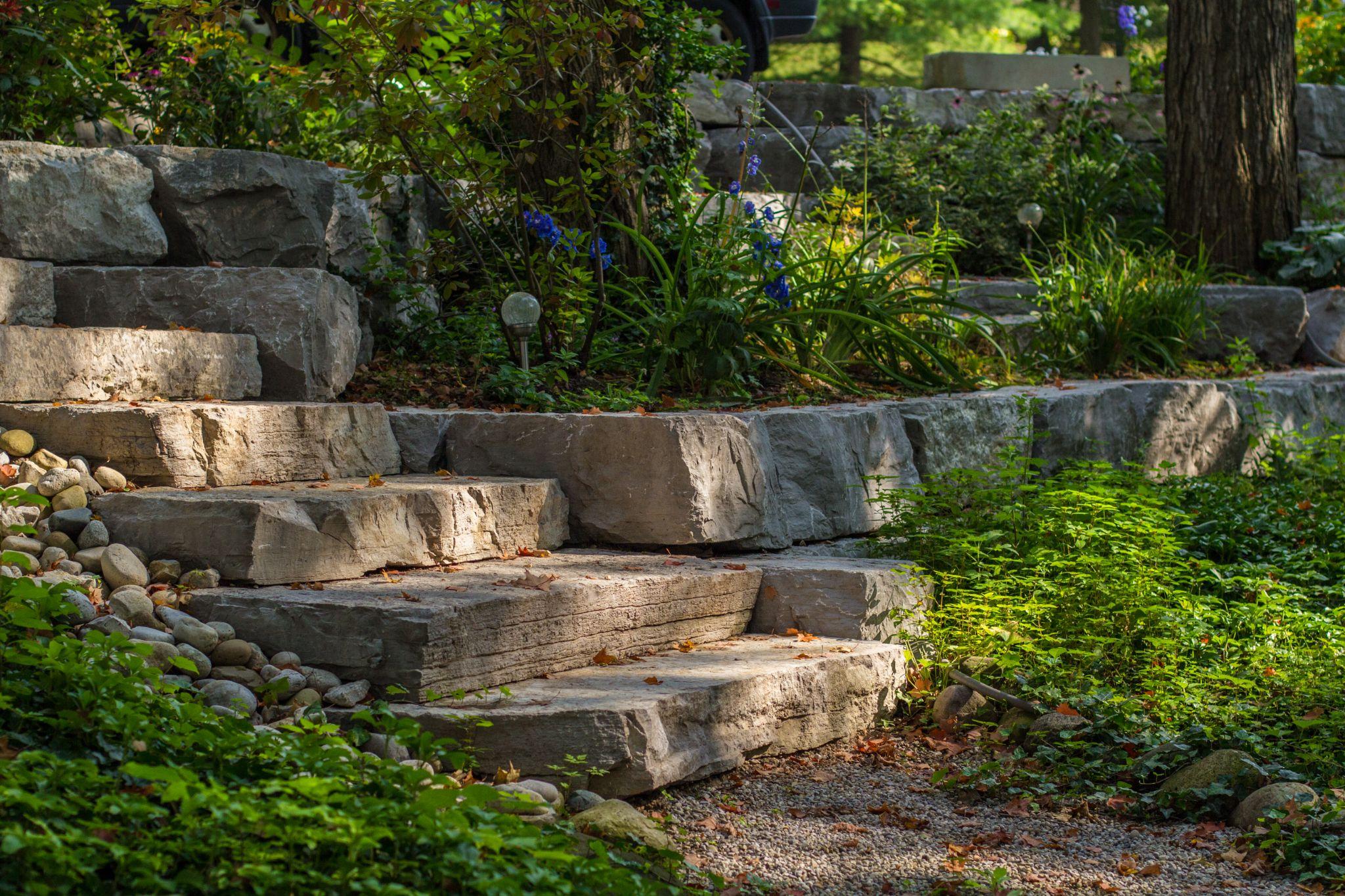
Our property reflects who we are. Just like us, it can age over time, occasionally needing minor repairs, sometimes major overhauls. When it comes to our outdoor spaces, the winter freeze-thaw cycle adds an extra test to our choices. Have the materials we chose stood up to the test of time? Is that patio an inviting space for guests, or is it full of cracks we try to ignore each spring?
Just as your health depends on strong foundations, the health of your outdoor space depends on them too. The hardscaping, the non-living, material-based parts of our outdoors, is the structure on which your outdoors are built. But when the time comes to make an overhaul, how do you make sure you’re making the right choices? How do you know you’re investing in quality foundations that will protect the value of your home and give your family an outdoor space to enjoy?
The work needs to be done properly. Surfaces should remain level, drain properly, and be consistent with the character of your home. Understanding the basics of hardscaping helps you make an informed choice before committing to construction.
This guide is designed to give you direct, clear answers to the frequently asked questions (FAQs) that most homeowners have about hardscaping.
If you want to explore a complete guide to hardscaping for your outdoor space, read our in-depth guide.
What Is Hardscaping?
Hardscaping refers to the solid, built elements of your outdoor space. These are the permanent features that create structure and function. Examples include paver patios, driveways, walkways, retaining walls, outdoor steps, and stone borders or seating areas. The opposite of hardscaping is softscaping, which focuses on plants and soil, while hardscaping focuses on construction and surface materials. Hardscaping combines with softscaping to create the overall landscaping for your property. Done well, hardscaping and softscaping feel cohesive and complementary, creating a feeling of intention and harmony.
What Is Included In Hardscape Construction?
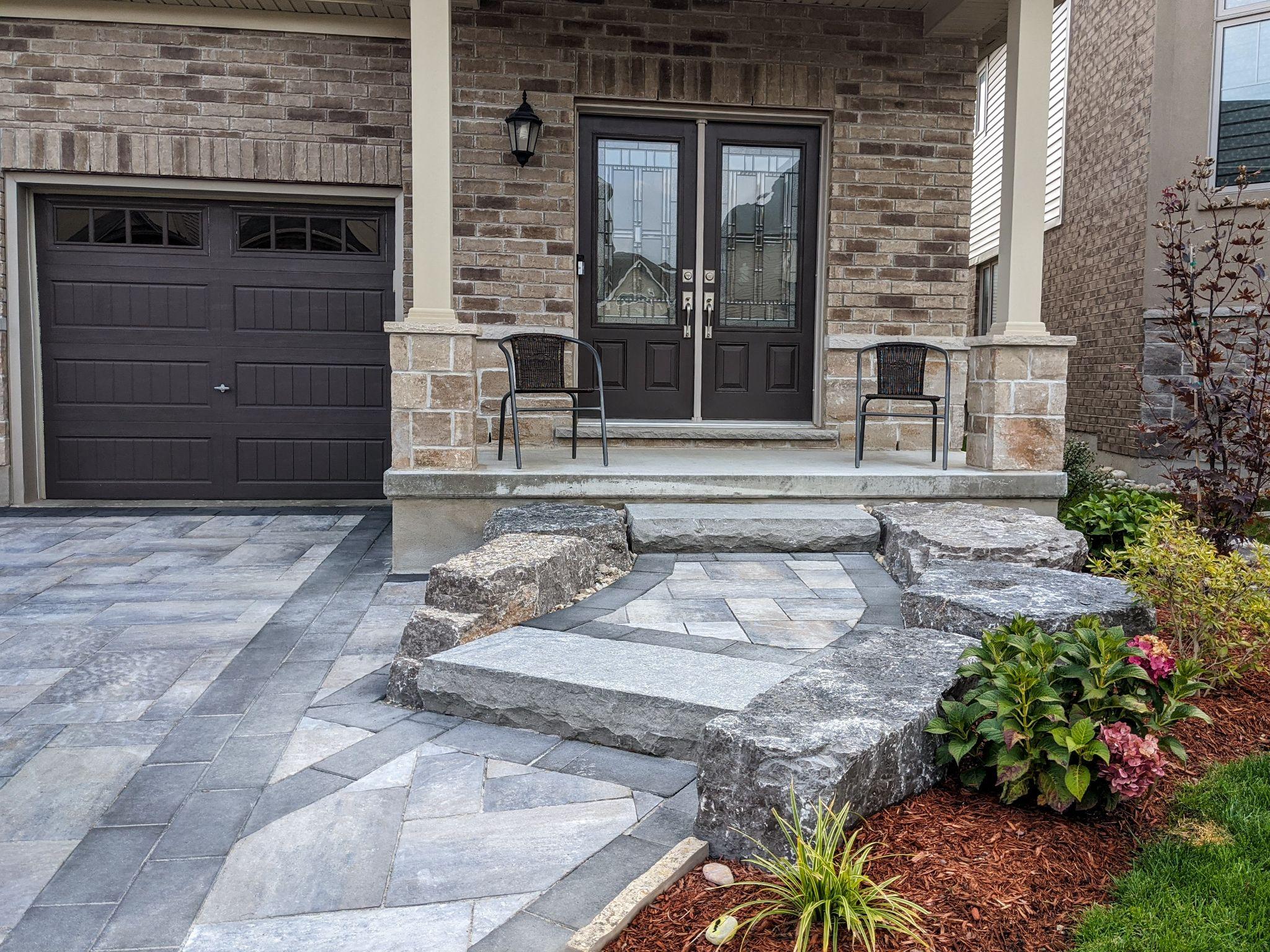
Hardscape construction typically involves careful site measurement and planning, excavation to proper depth, installation of a compacted granular base, grading and drainage management, placement of pavers, stone, or concrete, and finishing details with thorough cleanup.
The base preparation stage is especially important. A strong foundation supports the surface above and prevents shifting. If you would like to see how professional hardscape construction projects are structured from start to finish, learn more about our approach. The best teams provide communication at every stage of your hardscaping construction, ensuring you understand what is happening below the surface, not just what you see when the project is complete.
How Long Does Hardscaping Last?
One of the most searched questions is how long hardscaping lasts. The answer depends on installation quality, materials, soil conditions, and drainage. Properly installed paver systems can last 25 years or more. Natural stone may last even longer.
Longevity is also tied to base depth and compaction, water management, climate exposure, and usage patterns. In Ontario climates, the extreme annual freeze-thaw cycles put stress on surfaces, leading to shifting. Experienced installers understand and plan for that movement, reducing the chance of damage.
Material choices are also a major factor for hardscape lifespan. The poured concrete that was traditionally used for decades will crack after just a few years. Wood will eventually rot, especially when used for retaining walls that are exposed to the most water. That’s why at Helmutz we recommend interlock, natural stone, and porcelain tiles for hardscaping. These materials are much more endurable in our local climate, and if individual blocks or tiles are damaged, it’s then a case of replacing that one piece, rather than overhauling the whole structure.
Does Hardscaping Increase Home Value?
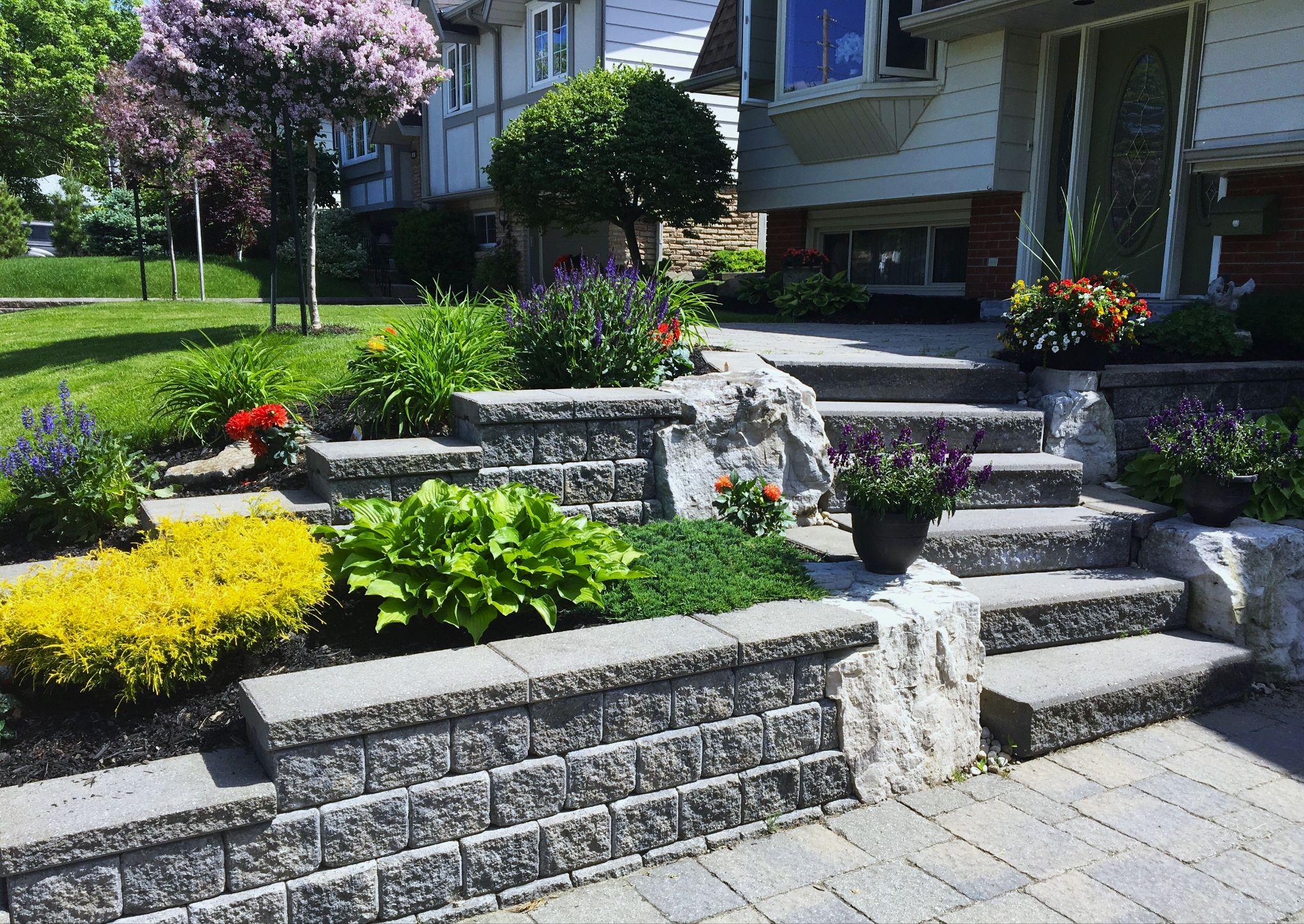
Homeowners often ask, “Does hardscaping increase home value?” If done right, the answer is almost always a strong yes. Updated patios, walkways, and retaining walls can improve curb appeal and increase usable outdoor living space. Well-planned installations feel permanent and functional.
On the other hand, poorly installed work can detract from value. If you invest in a cheap option now with non-specialized crews or a DIY approach, chances are you’ll spend more money on repairs or overhauls later. In the worst case scenario, larger scale damage could impact the value of your property.
To sum up, when outdoor spaces feel complete and cohesive, they often make a strong impression on future buyers. When built with quality materials by professionals, hardscaping represents a return on your investment by improving home value and providing an enjoyable outdoor space for years to come.
What Is The Best Base For Pavers?
If you are researching details, you have likely asked what the best base for pavers is. The typical base includes excavation to the required depth, compacted granular aggregate, a bedding layer for levelling, and edge restraints to hold everything in place. The exact depth depends on soil type and expected load. The base determines long-term performance. A weak foundation leads to settling and uneven surfaces. Beyond materials, compaction technique and moisture control during installation are equally important. The aggregate must be placed in lifts and compacted properly to prevent future movement. Skipping this step or reducing base depth may save time initially, but it often results in surface issues within a few seasons. A properly prepared base is what allows your pavers to remain stable year after year.
What Is Interlock?
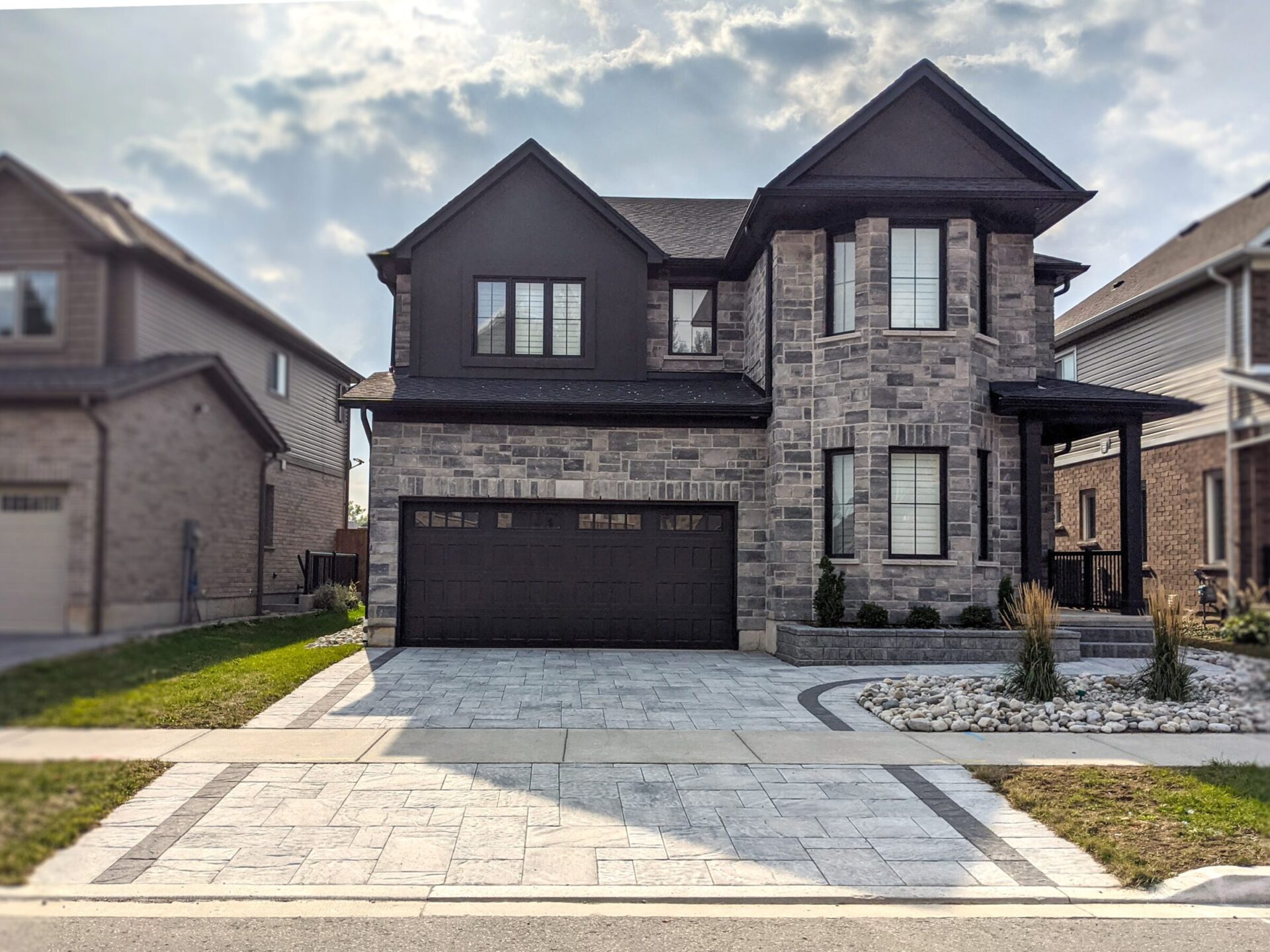
Interlock refers to concrete pavers designed to fit tightly together in a pattern. Jointing sand locks the units in place and creates a flexible surface. Aesthetically, interlock creates a more dynamic look than poured concrete, making interlock an attractive option for modern homes.
We recommend interlock over concrete because Individual pavers can be replaced; they perform well in freeze-thaw conditions, and they offer wide design options. Interlock is an increasingly popular choice across Ontario for patios and driveways due to its durability and attractiveness.
What Is The Difference Between Concrete And Pavers?
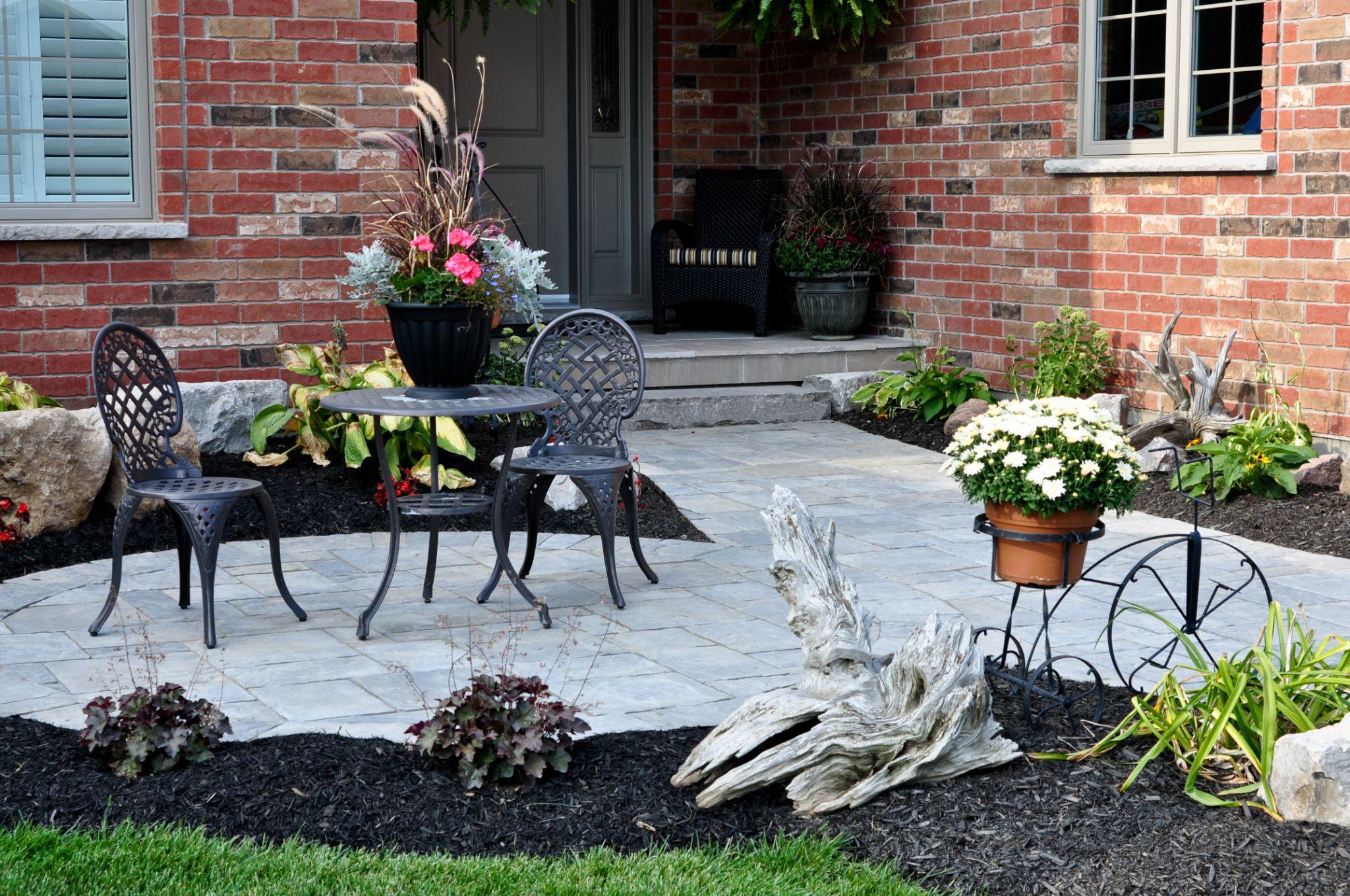
Concrete is poured as a single slab. Pavers are individual units installed over a prepared base. Concrete is prone to cracking over time, especially in climates with freeze-thaw cycles (which are extreme in Southwestern Ontario).
Pavers offer flexibility, and individual units can be replaced if damaged. Most homeowners prefer pavers for long-term durability, the simplicity of repairs, and their modern, attractive look that can be customized to the home’s aesthetic.
Do I Need Drainage For A Patio?
Yes, water must be directed away from your home’s foundation, retaining walls, and lawn areas. Proper grading and base preparation are built into responsible hardscape construction planning. Ignoring drainage can lead to pooling, erosion, and shifting surfaces. If your project includes structural retaining walls or elevation changes, it is helpful to understand how drainage is integrated behind those systems.
Are Permits Required For Hardscape Projects?
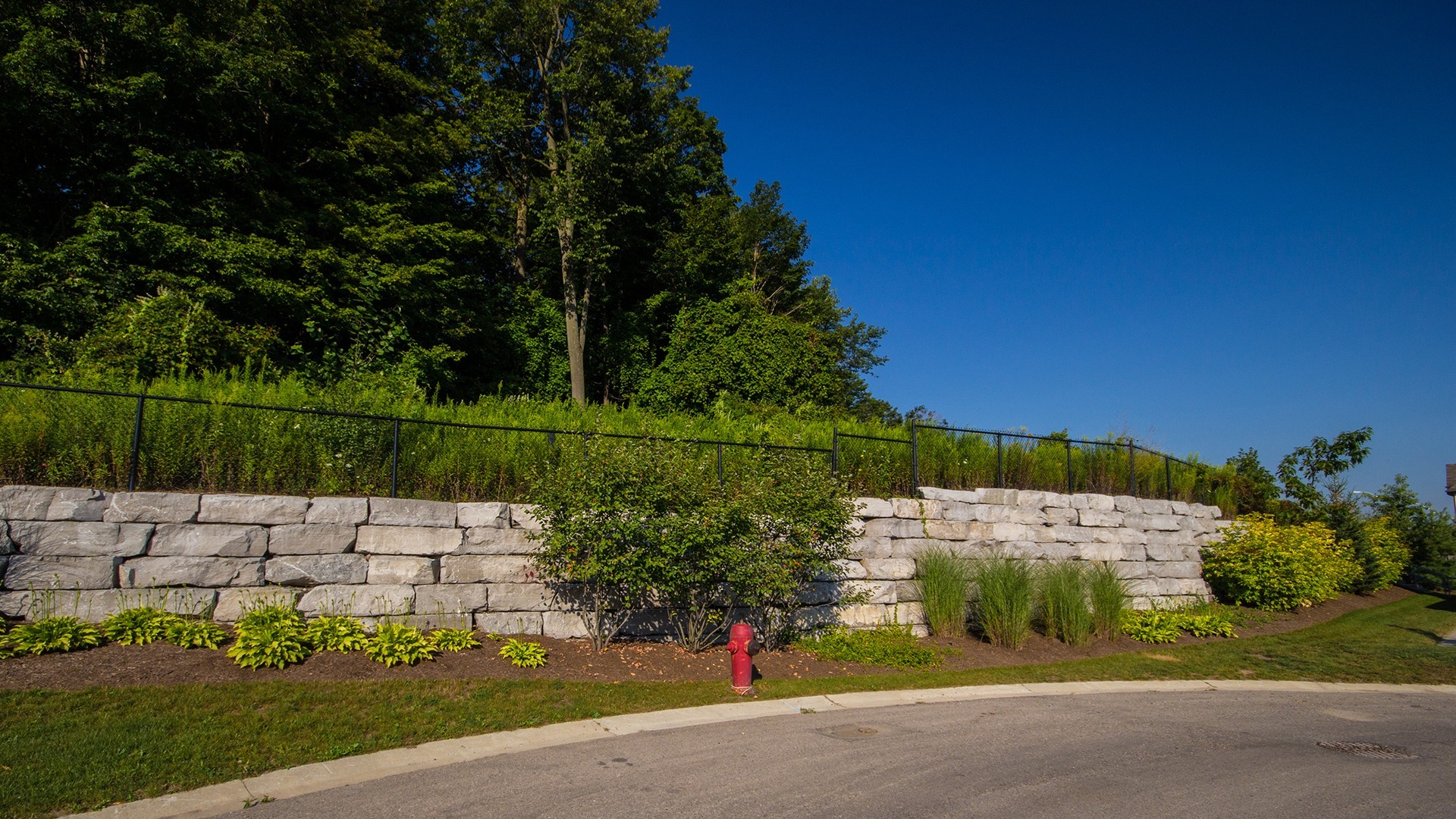
Another important question is whether permits for hardscape projects are necessary. Permits may be required if a retaining wall exceeds local height limits, grading changes affect drainage patterns, or driveway work connects to municipal roads. Municipal requirements vary. An experienced contractor will review regulations before work begins.
How Long Does A Hardscape Project Take?
Timelines depend on size and complexity. A smaller patio may take only a few days. Larger projects involving retaining walls and multiple levels can take several weeks. Weather conditions, site access, permit approvals, and material supply all affect scheduling. Organized crews and well-maintained equipment help projects move efficiently. Clear planning reduces disruptions and keeps expectations aligned.
How Do You Maintain A Paver Patio?
Maintenance generally includes sweeping debris regularly, occasional power washing, reapplying joint sand as needed, and optional sealing. Understanding how to maintain a paver patio helps preserve both appearance and function. When the base is installed properly, maintenance stays manageable and predictable.
How Do You Maintain A Retaining Wall?
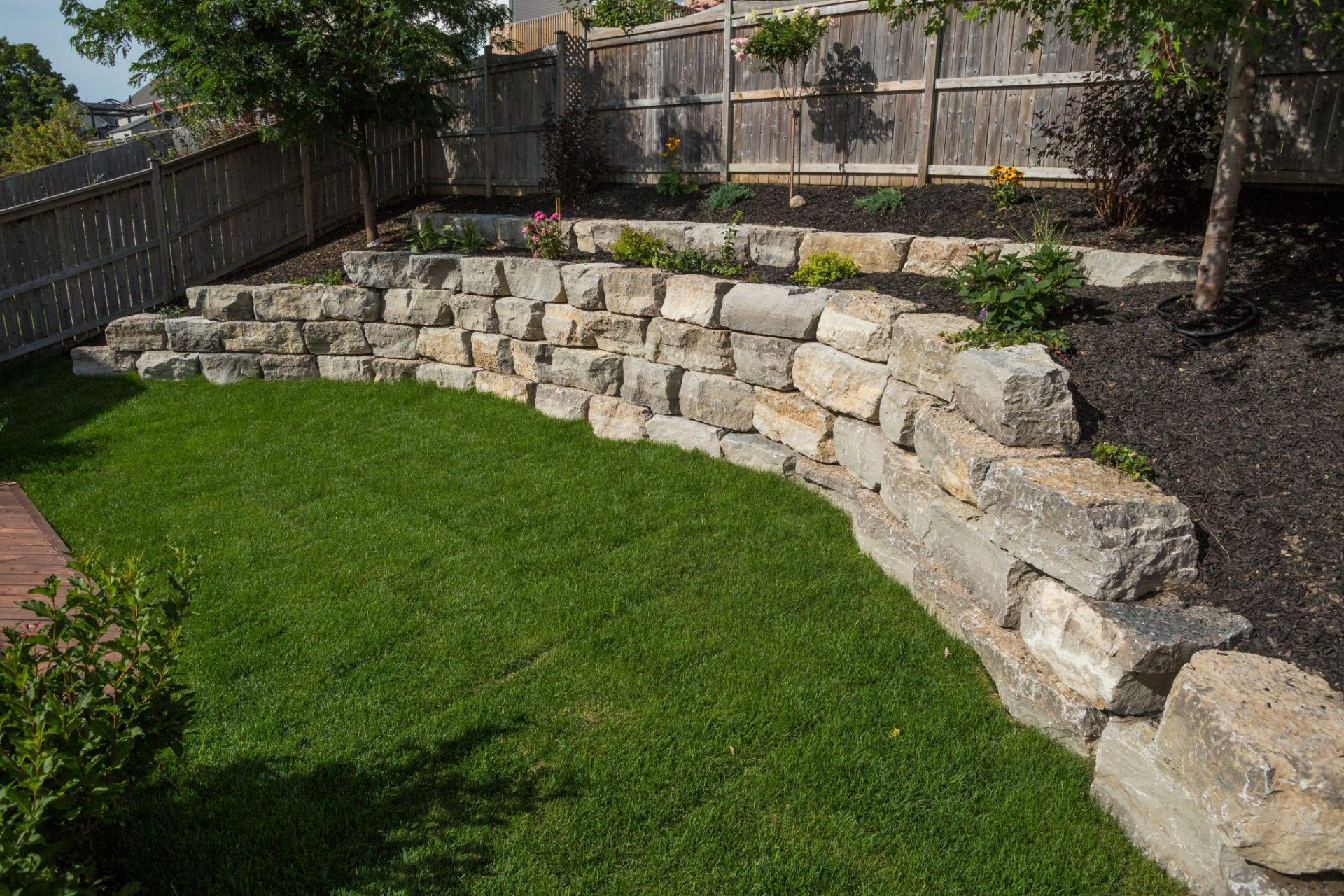
A properly installed retaining wall made of quality material designed to withstand freeze-thaw cycles will not require maintenance.
For older retaining walls that are either concrete or wood-based, regular upkeep will be required due to cracking, shifting and overuse. Check for proper drainage (usually indicated by pooling water in spring or during heavy rain), clear debris from weep holes, watch for movement or leaning, and monitor soil levels behind the wall. Good drainage behind the wall reduces pressure buildup.
Retaining walls serve both structural and visual purposes. Ignoring the warning signs of older or poorly-installed retaining walls can lead to costly repairs in the long term.
Interested in adding or updating a retaining wall on your property? Explore our expert retaining wall services.
Can Hardscaping Help With Yard Drainage Issues?
Yes, when properly designed by experts. Strategic grading, retaining walls, and permeable surfaces can redirect water in predictable ways, reducing pooling. Water flow should be factored in from the beginning of any hardscaping project, especially if an area that was once lawn is getting paved over. The water from snow melt and heavy rain still has to go somewhere.
Failing to properly plan for drainage can lead to major problems over time, such as:
- Basement flooding
- Foundation damage
- Soil erosion
- Garden bed flooding
Professionals work with your property, not against it, to plan for drainage and prevent long-term issues from developing.
Is Hardscaping Suitable For Sloped Yards?
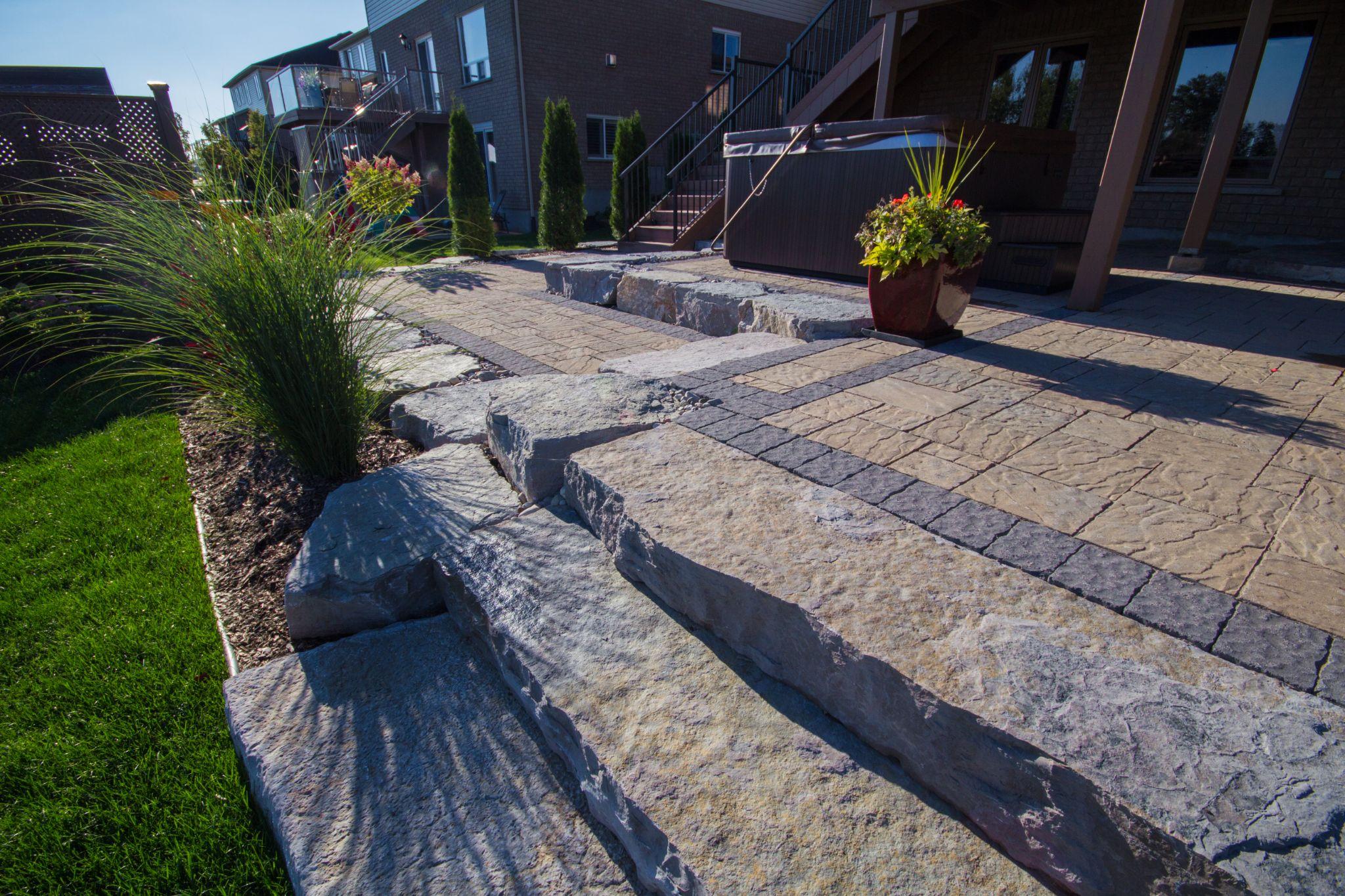
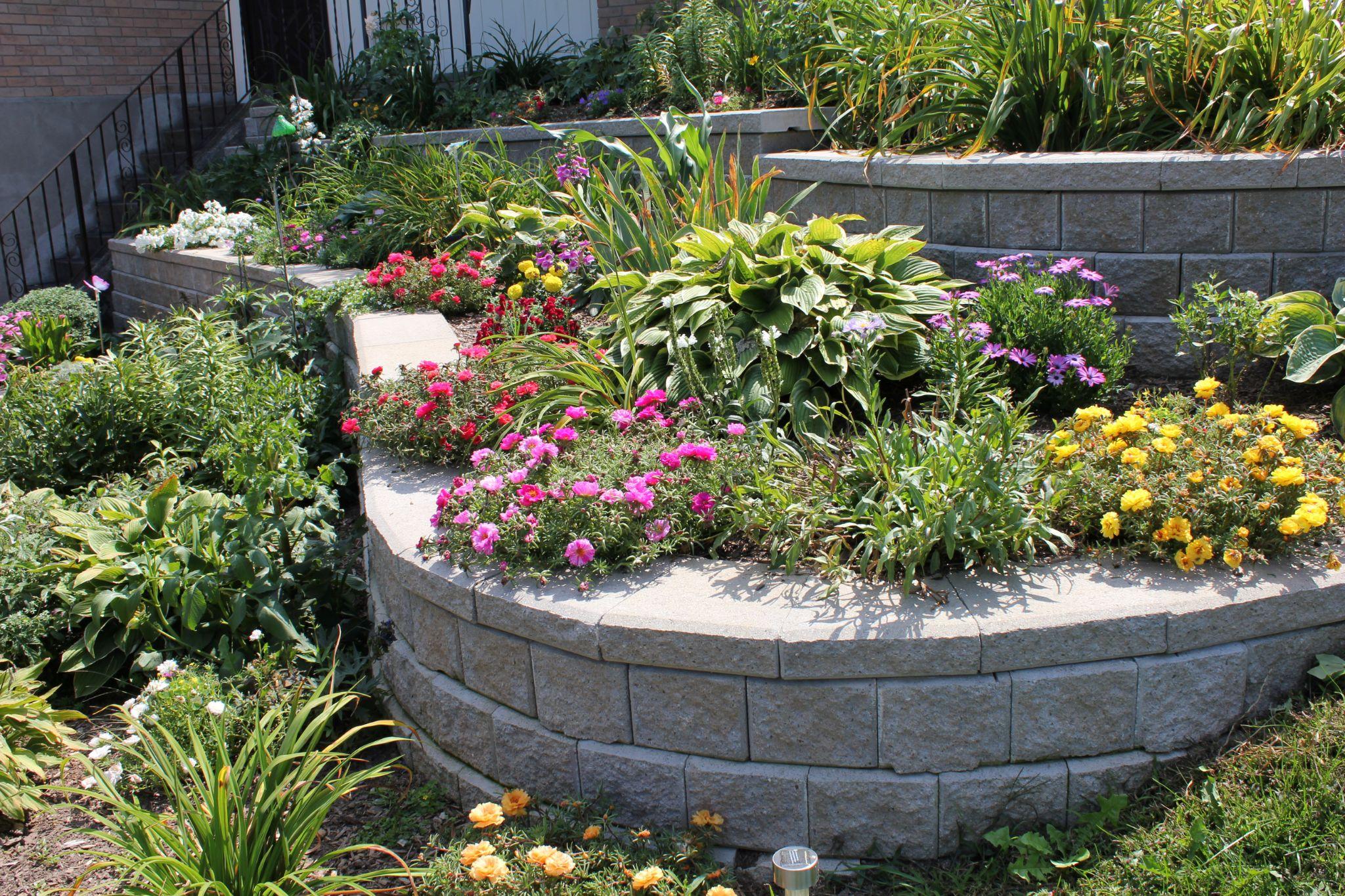
Sloped properties often benefit from hardscaping. Retaining walls can create level terraces, and steps and pathways improve access and safety. During planning, experienced teams assess soil conditions and water flow.
How Do Freeze-Thaw Cycles Affect Hardscaping?
Across Canada, freeze-thaw cycles cause expansion and contraction in soil and materials. This can cause noticeable shifting in colder months. While poured concrete structures are prone to cracking, interlock paver systems are designed to cope with freeze-thaw cycles. They perform well because the individual units they are made from allow for shifting without cracking.
Experts plan for the freeze-thaw cycle by choosing higher-quality materials and considering the surrounding area, meaning that any shift due to natural winter patterns is minor and the structure returns to its original spot when the weather warms up.
When Is The Best Time Of Year To Start Hardscaping?
In Ontario, winter makes life difficult for all construction projects. Hardscape installation often requires excavation, which is impossible when the ground is frozen or there’s too much snow on the ground. That means that spring through early fall is typically ideal.
Remember that planning early in the season gives you more flexibility in scheduling. The climate can impact timelines in any season. The more professional the crew, the more likely they are to be efficient without compromising quality.
How Disruptive Is A Hardscape Installation?
Hardscape installation involves excavation, materials delivery, and equipment use. You can expect temporary noise, equipment access, and staging of materials during the project. However, organized scheduling and clean work practices reduce inconvenience. When crews focus on doing the job properly the first time, you avoid repeated visits and extended timelines. That commitment to follow through leads to long-term satisfaction. Taking time to understand the process, materials, and planning steps puts you in a stronger position. A well-executed project should feel organized from start to finish.
At Helmutz Landscape & Interlock, this is exactly the level of premium service our crews deliver. We believe in building quality from the beginning, using only the best materials, installed to the highest of standards.
If you are interested in exploring our hardscape services, such as interlock pavers or retaining walls, you can request a quote from our team of experts today.
Summary
This hardscape construction FAQ guide provides clear answers about materials, durability, planning, drainage, and timelines so you can confidently move forward with your outdoor update. This piece helps you explore various aspects of hardscape construction and address the questions our team often gets asked. Hardscape construction is a complex process, however, so it would be helpful to request a quote and talk with the Helmutz Landscape & Interlock team to get more specific answers to your hardscaping questions.
Tags: